By: Rhonda Thomas – Published on NewAmerican.com, October 16, 2025 (Updated 01.03.26)
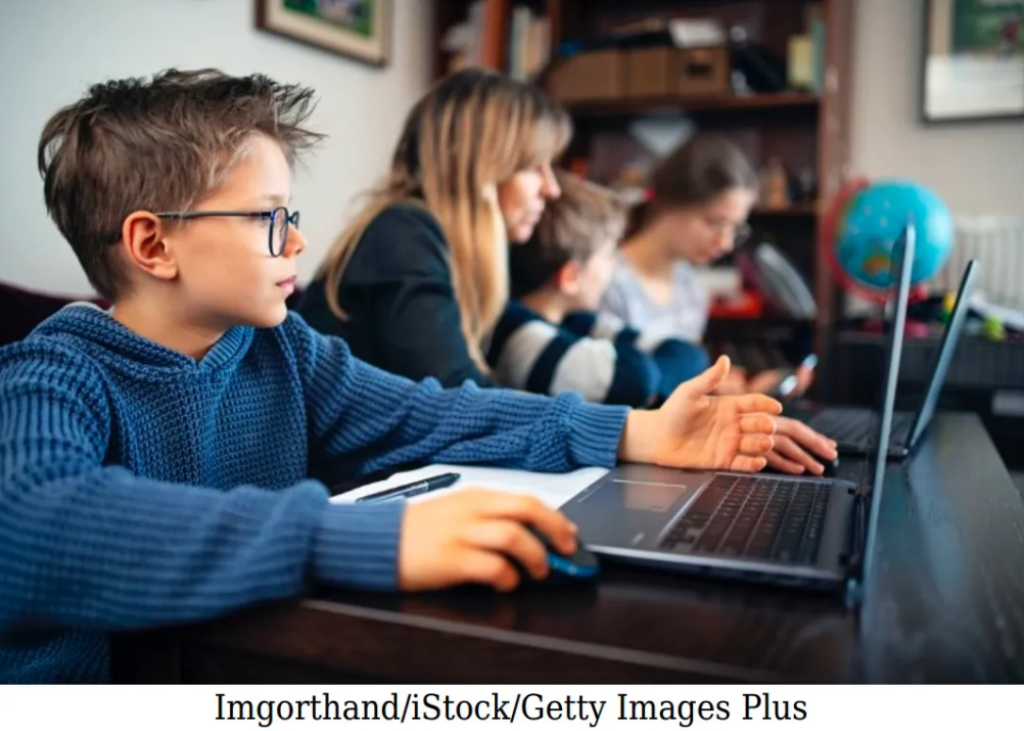
Sarah sits at her kitchen table while her two children sound out words from a well-worn Bible reader. It’s the kind of ordinary scene that has shaped generations of homeschooled students, personal, faith-filled, and free. Yet a new policy paper from the United Nations Educational, Scientific, and Cultural Organization (UNESCO) would subject even this simple act to international “quality” standards. Its September 2025 article “Homeschooling Through a Human Rights Lens” argues that governments must regulate home education to ensure it meets “state-defined quality benchmarks.”
The Surface Language — and What It Implies
UNESCO’s statement appears harmless. It praises home education as “a legitimate modality of learning,” but only if it meets “requirements of availability, accessibility, acceptability, and adaptability” outlined in human-rights treaties. The statement calls for registration systems, regular inspections, and formal assessments of learning outcomes. It also references the UN Convention on the Rights of the Child (CRC) to argue that education should foster “socialization, participation, and exposure to diverse perspectives.”
On paper, these goals seem to protect children. In reality, they replace parental judgment with government control. When the state defines “quality” and “diversity,” the right to educate one’s own child becomes a permission granted by bureaucracy.
How the UN Influences U.S. Education
Most Americans believe the UN has little control over domestic schooling. Technically, the United States has not ratified the CRC. However, UNESCO and related agencies influence education policy through soft law, non-binding guidelines that national officials voluntarily follow. Federal initiatives such as Race to the Top and the Every Student Succeeds Act adopt many of the same data-tracking and “equity” metrics promoted by UNESCO and the OECD.
From there, the ideas trickle down: International goals become federal grant language, state accountability standards, teacher-training modules, and eventually the standards that determine what is included in classroom — and even homeschool — materials. In this way, UN policy doesn’t need to legislate; it influences, funds, and accredits its way into compliance.
What “Human Rights” Mean in UN Language
To an American ear, “human rights” sounds like “liberty.” However, in UN usage, rights are managed by the state as entitlements rather than inherent freedoms. The Universal Declaration of Human Rights (1948) affirms that each right is exercised “subject to limitations determined by law.” That single clause transforms freedom into a conditional right.
Under the CRC, governments — not parents — are the primary guarantors of the child’s “best interests.” Article 29 instructs countries to shape education around values of tolerance, environmental responsibility, and respect for cultural diversity. These ideals are not problematic in themselves, but they create opportunities for officials to decide whether a parent’s moral or religious teachings align with “acceptable” values. A right that depends on government approval is no longer a right, it becomes a license.
Why This Matters to Home-educating Families
Most homeschool parents are not political actors; they are mothers and fathers attending to their children’s academic, moral, and spiritual needs. However, the UNESCO framework reinterprets these families as potential violators of a global standard. When “quality assurance” and “socialization outcomes” become measurable, governments might require standardized testing, regular home visits, or mandatory participation in external programs. The distinction between oversight and intrusion quickly blurs.
Even voluntary funding schemes, such as vouchers, tax-credit scholarships, or education savings accounts, can act as regulatory gateways. Once public money is allocated, policymakers gain the authority to scrutinize curricula or data. Families who value independence must therefore defend not only the right to teach but also the right to privacy.
The American Principle of Parental Authority
Long before any treaty was formed, U.S. law recognized parents as the primary guardians of their children’s education. In Pierce v. Society of Sisters (1925), the U.S. Supreme Court affirmed that “the child is not the mere creature of the State.” That precedent, based on natural-rights philosophy, embodies a worldview fundamentally different from the UN’s collectivist approach. The State may protect children from abuse or neglect, may not override the family’s role in shaping conscience and belief.
When international agencies promote “global citizenship” as the ultimate goal of education, they substitute the American ideal of ordered liberty with one of managed conformity. Parents who view education as a sacred trust, handed down by God to the family, must not relinquish that responsibility to distant technocrats.
What Lawmakers Should Do
A sensible framework would be to:
1. Recognize parental rights as fundamental liberties protected under the Fourteenth Amendment, which affirms that parents — not the state — hold the primary authority to direct the upbringing and education of their children.
2. Limit state involvement to a one-time notice of intent to homeschool, with no approval, inspection, assessment, or curriculum oversight.
3. Protect data privacy by eliminating reporting requirements and prohibiting linkage of homeschool records to centralized databases or digital IDs
These steps would preserve parental rights and their authority to educate their children without government involvement.
A Call to Vigilance
UNESCO’s influence might seem distant, but its impact is tangible. It shapes the terms of federal education grants, teacher training, and state accountability standards. If unchecked, it could even alter the parent-child relationship itself. The answer isn’t isolation but vigilance: Parents, churches, and local communities must demand that education remains a family responsibility supported, not controlled, by the State.
Education in freedom starts at the kitchen table, where love guides before policy steps in. No international organization can gauge that quality, and no government standard should attempt to do so.